

Into the Great Wide Open
A Story Unfolding Across Timelines.


Current Time.
Liat Portal: I connected with
from here on Substack. At first, I didn’t associate the connection with him, and I was curious about how the algorithm brought us together or why we connected. I only recently understood that the connection wasn’t made through the algorithm’s mysterious ways.After tracing my steps back to their origin, I realized he was one of the editors who approved an article I published in The Riff, a publication on Medium. At some point after that, he started following me here, but he didn’t subscribe to
immediately.Although we had never met in person, it felt like he knew me on a deeper level. He knew me through the music I love. His publication and the first stories that popped into my Substack feed after subscribing to it threw me back to somewhere in the '90s. Albums I had forgotten I used to listen to obsessively kept showing up in The 100 Greatest Albums of All Time series he published with Sam Colt.
The list of albums took me back to my lame CD player that used to get stuck quite often while playing albums from the greatest artists. I also remembered the nightclubs we used to attend, where the DJs introduced us to the best musicians, including Depeche Mode, The Cure, Guns N' Roses, Duran Duran, Björk, U2, Van Halen, Paul Simon, Portishead, Kate Bush, Pearl Jam, New Order, Suede, Pixies, Prince, The Beatles, David Bowie, The Police, Pink Floyd, Joni Mitchell, Nirvana, Bruce Springsteen, Metallica, Tracy Chapman, Suzanne Vega, Alanis Morissette, and my favorite band back in the 90s - R.E.M.
I long for that time in history that no other era can match. Not just because I was younger but because the world was different back then. In the '80s and '90s, the world's top musicians were not just entertainers; they were leaders. They used their influence to raise awareness about global issues and inspire world leaders to take action for peace and healing. Musicians came together, producing concerts and releasing songs to support causes like hunger relief, health crises, and peace efforts. They led the music industry to play an active role in the demand to solve these problems, something the world lacks today.
While processing these music flashbacks and memories, I discovered that sometime along the way, Kevin subscribed to my publication, read some of my stories, and learned new things about Tel Aviv. That led us to start chatting, and I shared with him the complete series of stories I wrote about Israeli rock musicians Berry Sakharof and Rami Fortis. One thing led to another, and I asked if he was interested in collaborating with my stories about the Israeli music culture, which is unique and blends the various ethnicities of Jewish communities from all over the world with varied rhythms. He agreed to explore it and see where it takes us.
We are both curious about where this journey will lead us. But until we find out, we invite you to follow the music lane that leads to Israeli culture and welcome you into our conversations.

Kevin Alexander: One of the things that has always drawn me to music is its ability to affect change. There are plenty of protest songs, and you don't have to dig too far to find songs traditionally sung by union workers or on the picket line.
But musicians' influence has also, at times, been a force for good; if you are, ahem, of a 'certain age," you'll remember when MTV played music videos. And you'll also remember their channel's Rock the Vote campaigns, where famous artists of the day encouraged us all to register to vote and cast a ballot. They were using their platform for the greater good, even if we weren't yet familiar with that term.
Some may also remember Pearl Jam taking on Ticketmaster and fighting the company's monopoly and pricing tactics. The band even testified on Capitol Hill. They were musicians, but they were fans, too. Sometimes, protests happen offstage, too. They were ultimately unsuccessful, but by going to the mat for their fans, they showed that any good cause is worth fighting for.
So music is good for affecting change. But its superpower is building a coalition. There are an infinite number of examples where, on the surface, two people may not have anything in common, only to realize that, at a minimum, they share a love for the same bands. That sliver of common ground is a bridge to further connection/comity. Specif to Liat and I, on the surface, we are opposites; she and I grew up thousands of miles apart in different countries, on different continents, steeped in different cultures.
And yet, it didn't take long for the similarities to reveal themselves. We enjoyed listening to the same artists and even (used to) enjoy doing so over coffee and cigarettes. Those artists were an entry point to learning and sharing more about the world we inhabit. It meant learning more about things like architecture, specific to Tel Aviv (an area I've long wanted to visit). For Liat, it was an opportunity to open the window further and share the work of Israeli artists, some of whom are known worldwide and some who may not be. We will start with the work of Ofra Haza and go from there.

At this point, neither of us is sure what specific direction this conversation will take—it won't be scripted, and if I'm honest, that's half the fun. The last thing we think people will want to read is something sterile and predictable. There's already enough paint-by-numbers writing masquerading as dialogue as it is.
Instead, this conversation will start with–and is ostensibly about—the work of Israeli artists that Liat loves and that are new to me, beginning with Ofra Haza. We'll talk about those, of course, but where do we go after that? It's anybody's guess.
Coming into this, I knew very little of Ofra Haza's work. I had thought (?) my first exposure to it was in the mid-90s, hearing her sampled on Single Gun Theory's track "Fall," which I happened to be playing while shopping at Tower Records. I’ve spent the last few days ripping apart my house and the internet to make sure it's her on the record, but I've had no luck. In the meantime, my memory will have to do. I also vaguely recall seeing a video of hers on MTV, but even that is foggy. For all intents and purposes, it's safe to assume I'm coming into this without knowing anything about her work.
That said, I've written about the often serendipitous (and very coincidental) ways music finds us. Sometimes, it's listening to the radio at just the right time. Sometimes, a friend brings something over to share. Other times, you happen to be in a suburban record store at just the right time.
Before we get too far, I'm curious to know how music discovery worked for you. I know how I found specific records at specific times, but I find the paths other people took fascinating. What were some of the ways you found new artists/records? I know Haza was big in Israel, but how did you first find her? As far as I know, we're both GenX, and much of this happened pre-internet. Was it the radio? Was it from friends or family?
(NOTE: I was ultimately mistaken. The song I was thinking of is “You Are Mine” by Chaba Fadela)
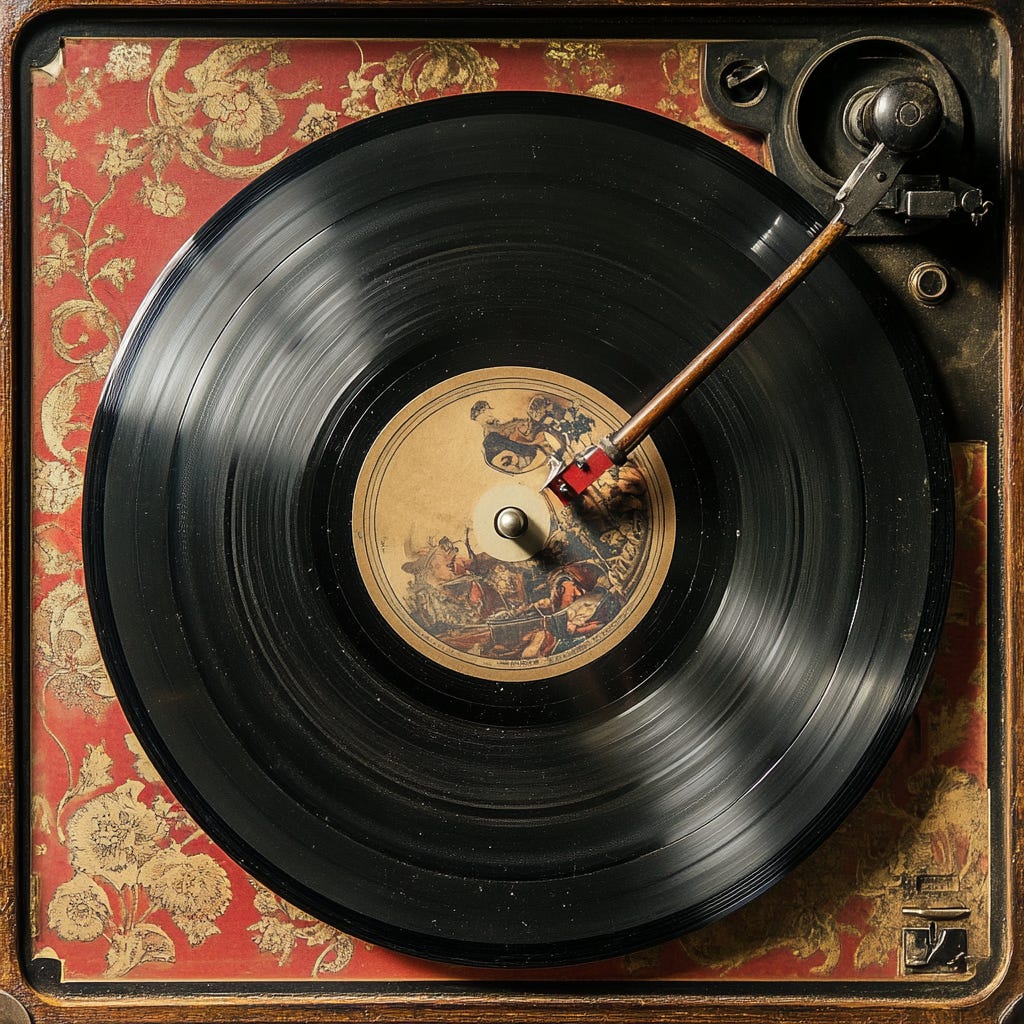
Liat Portal: Taking this journey with you makes me smile and fills me with anticipation. Along with food, music is the essence of my life, and I have learned so much from it. Music plays a significant role in shaping the person I am today. Music discovery has always been a fascinating journey for me, one that began in my childhood and continues to this day, thanks to my father, the biggest Beatles fan who generally listens to the radio all day long in the background. Since I was a child, I’ve always remembered music playing in the background, whether we were at home, driving, or engaged in any activity outside. Most of the time, it was the radio, but we also listened to legacy albums by Pink Floyd, Joe Cocker, Leonard Cohen, and, of course, every Beatles album or radio and TV show about them.
As a teenager, I began to expand my horizons beyond the music we listened to at home. Around the same time, a nightclub opened in the neighboring town, and the DJ played Depeche Mode, The Cure, U2, and many other artists now associated with '80s and '90s rock, new wave, grunge, and folk influences. I hope to explore these genres with you more deeply in the future and share how they impacted my life. But first, let’s start with what brought us to this piece together.
Israeli music has long been a unifying force, connecting us, the Israelis, as a nation. Many songs are deeply tied to everyday life, Jewish survival, holidays, Memorial Day, wars, and love. A significant number also address the implications of the Holocaust for the second and third generations.
One of the most famous songs, written by Ehud Manor and performed by Ofra Haza for the Eurovision Contest in 1983, was “Chai.” That year, the competition was held in Germany, and the song emphasized the Jewish people's resilience and triumph of surviving through generations despite the Holocaust. Its most iconic line, “Am Yisrael Chai,” which means in Hebrew - The People of Israel Live, became an anthem of hope and survival. This line also got even more powerful meaning during the last year. My father was a huge fan of Ofra Haza, and we still have her records, which play on the turntable. When I was born, she was already a big star in Israel, and for me, she was ever-present with her albums, appearances at kids' festivals, TV shows, and constant media coverage.
This is just a sneak peek and the opening shot of a series about Ofra Haza. I hope we’ve sparked your curiosity to join us on this journey. Stay tuned for the first blog post episode about Ofra Haza.

Please fasten your seatbelts and subscribe.
Unlock my potential to write the next great chapter in the most extraordinary story ever told. Your support would make a big difference in taking this journey to the next level.
Follow me on My Journey to Infinity to find out. It will be more beautiful than you could ever imagine.
Liat

In this journey, I weave together episodes from my life with the rich tapestry of Israeli culture through music, food, arts, entrepreneurship, and more. I write over the weekends and evenings and publish these episodes as they unfold, almost like a live performance.
Each episode is part of a set focused on a specific topic, though sometimes I release standalone episodes. A set is released over several days to make it easier for you to read during your busy workday. If one episode catches your attention, make sure to read the entire set to get the whole picture. Although these episodes are released in sets, you can read the entire newsletter from the beginning, as it flows smoothly, like music to your ears - or, in this case, your eyes.